



Choosing between telescopic bleachers and fixed stands represents one of the most consequential decisions in sports venue planning. The choice affects not just seating capacity, but overall facility flexibility, maintenance costs, and long-term operational efficiency. Both systems have distinct advantages — the key lies in matching seating type to venue mission, event profile, and budget realities. This comparison examines the critical factors that should drive your decision.
Space Utilization and Flexibility
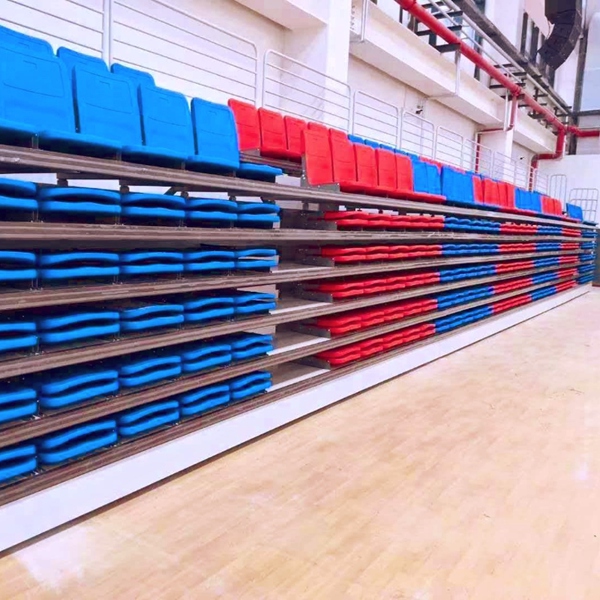
Telescopic bleachers dominate when venue flexibility matters. A school gymnasium used for physical education classes, basketball games, graduation ceremonies, and community events benefits enormously from retractable seating. When retracted, the entire floor becomes available for activities requiring open space. This flexibility can increase facility utilization by 40-60% compared to fixed seating that permanently occupies floor space.
Fixed stands make sense when the venue serves a single primary purpose. Dedicated stadiums hosting regular games with predictable attendance patterns gain little from retractable seating. The permanent nature of fixed stands also creates a sense of permanence and tradition that some venues value. Professional sports facilities often combine both systems — fixed seating for premium areas and telescopic bleachers for overflow or multipurpose sections.
Cost Considerations and ROI
Initial costs favor fixed stands for simple installations. Concrete or steel fixed bleachers cost $50-150 per seat installed, while telescopic systems range from $200-500 per seat depending on automation level and row capacity. However, total cost of ownership tells a different story. Telescopic bleachers enable diverse revenue-generating events that fixed seating precludes. Schools report recovering their telescopic bleacher investment through facility rentals within 3-5 years.
Maintenance costs also differ significantly. Fixed stands, particularly concrete, require minimal ongoing maintenance beyond periodic inspections and cleaning. Telescopic bleachers need regular lubrication, motor maintenance (for powered units), and occasional component replacement. Quality manufacturers design systems for 10,000+ deployment cycles, but this moving machinery inevitably requires more attention than static structures. Budget for annual maintenance costing 2-4% of initial system cost.
Installation and Structural Requirements
Fixed stands demand substantial foundation work. Concrete bleachers require engineered foundations with proper drainage and reinforcement. Structural steel fixed seating needs robust framing and professional installation. Both require significant lead time — often 3-6 months from order to completion. The installation also creates substantial disruption to existing facility operations.
Telescopic bleachers offer faster deployment with less structural impact. Floor-mounted systems bolt to existing concrete slabs without major foundation work. The primary requirements are adequate floor flatness, sufficient slab thickness (typically 4-6 inches), and proper electrical service for powered units. Installation often completes within 1-2 weeks, minimizing facility downtime. This speed advantage makes telescopic bleachers ideal for retrofitting existing facilities.
Making the Decision
Venue mission should drive the decision. Multi-purpose facilities, schools, and community centers almost always benefit from telescopic bleachers. The ability to host diverse events justifies the higher initial cost through increased revenue and programming options. Dedicated sports facilities with predictable event schedules and sufficient permanent seating might find fixed stands more economical.
Consult with an experienced bleacher supplier who can model both options for your specific venue. Quality suppliers provide detailed cost comparisons, space utilization analyses, and lifecycle cost projections. This data-driven approach removes guesswork and ensures your seating investment delivers optimal value for decades. Whether you choose telescopic or fixed, proper specification and professional installation remain critical for safety and performance.
References:
National Federation of State High School Associations (NFHS) Facilities Manual
ASTM F2970-13 Standard Guide for Telescopic Seating Systems
International Building Code (IBC) 2021 Section 1029 Grandstands
ISO 9001:2015 Quality Management Systems for Seating Manufacturing