



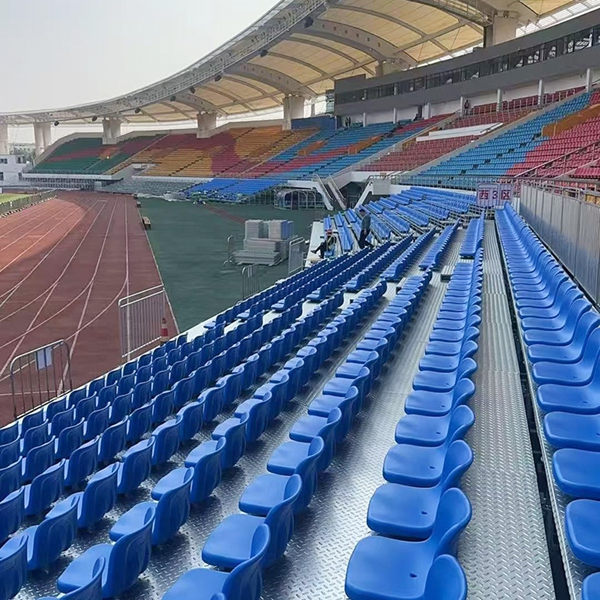
Outdoor stadium seating faces a brutal combination of environmental challenges: scorching UV radiation, freeze-thaw cycles, driving rain, and sometimes even snow loading. Unlike indoor seating protected from the elements, outdoor bleachers must maintain structural integrity and spectator safety while enduring decades of weather exposure. Modern manufacturers employ advanced materials science and rigorous testing protocols to ensure their products survive where lesser seating fails within just a few seasons.
Material Selection for Weather Resistance
Aluminum has emerged as the premier choice for outdoor stadium seating, and for good reason. Unlike steel, aluminum forms a protective oxide layer that prevents corrosion even when the coating is scratched. Marine-grade aluminum alloys used in premium bleacher systems resist salt spray corrosion, making them suitable for coastal installations. The material's high strength-to-weight ratio also reduces foundation requirements and simplifies installation.
For seating surfaces, high-density polyethylene (HDPE) and fiberglass-reinforced polymer (FRP) dominate the market. These materials don't absorb moisture, resist UV degradation, and maintain structural properties across extreme temperature ranges. Premium manufacturers often use co-extruded HDPE with UV stabilizers integrated throughout the material, not just on the surface. This ensures that even as the seat ages and surface wear occurs, the underlying material retains its weather resistance.
UV Protection and Color Stability
Ultraviolet radiation degrades most polymers over time, causing chalking, cracking, and color fade. Quality outdoor seating incorporates UV inhibitors during the manufacturing process, not just as a surface treatment. These additives absorb or reflect UV radiation before it can break polymer chains. The best manufacturers test their materials in accelerated weathering chambers that simulate years of sun exposure in a matter of weeks, ensuring color stability and structural integrity.
Powder coating for metal components has also advanced significantly. Modern polyester powder coatings contain UV absorbers and are applied at thicknesses exceeding 3 mils (75 microns). This creates a durable barrier that resists chipping, scratching, and UV damage. Some suppliers offer PVDF (polyvinylidene fluoride) coatings for extreme environments, providing superior UV resistance and color retention even in high-altitude or desert installations.
Structural Engineering for Environmental Loads
Outdoor seating must withstand more than just spectator loads. Wind loading can exert tremendous force on bleacher structures, particularly on the upper rows. Structural engineers calculate these forces using local building codes that account for regional wind speeds and exposure categories. In hurricane-prone regions, bleachers may require anchoring systems capable of resisting uplift forces exceeding 100 pounds per square foot.
Snow and ice loading present another critical design consideration. Northern installations must handle roof snow loads transferred to bleacher structures, plus the additional weight of accumulated ice on seating surfaces. Engineers specify stronger frame members and closer support spacing in these applications. Drainage is equally important — seating surfaces must shed water quickly to prevent ice formation and reduce corrosion risks at connection points.
Longevity and Lifecycle Maintenance
A well-designed outdoor bleacher system should provide 20-30 years of service with minimal maintenance. Stainless steel hardware, hot-dip galvanized frames, and anodized aluminum components all contribute to this longevity. However, even the best materials require periodic inspection. Manufacturers typically provide detailed maintenance schedules covering lubrication points, fastener torque checks, and coating inspections.
When selecting an outdoor stadium seating supplier, inquire about accelerated weathering test results, coating thickness specifications, and structural calculations. Reputable manufacturers readily share this documentation and often provide warranties covering both materials and workmanship for 10-15 years. This level of confidence reflects the robust engineering that goes into modern outdoor seating systems built to withstand whatever nature delivers.
References:
ASTM G154-16 Standard Practice for Operating Fluorescent Ultraviolet Lamp Apparatus
American Society of Civil Engineers (ASCE) 7-16 Minimum Design Loads for Buildings
Aluminum Association Aluminum Design Manual (2020 Edition)
ISO 14001:2015 Environmental Management Systems in Manufacturing